


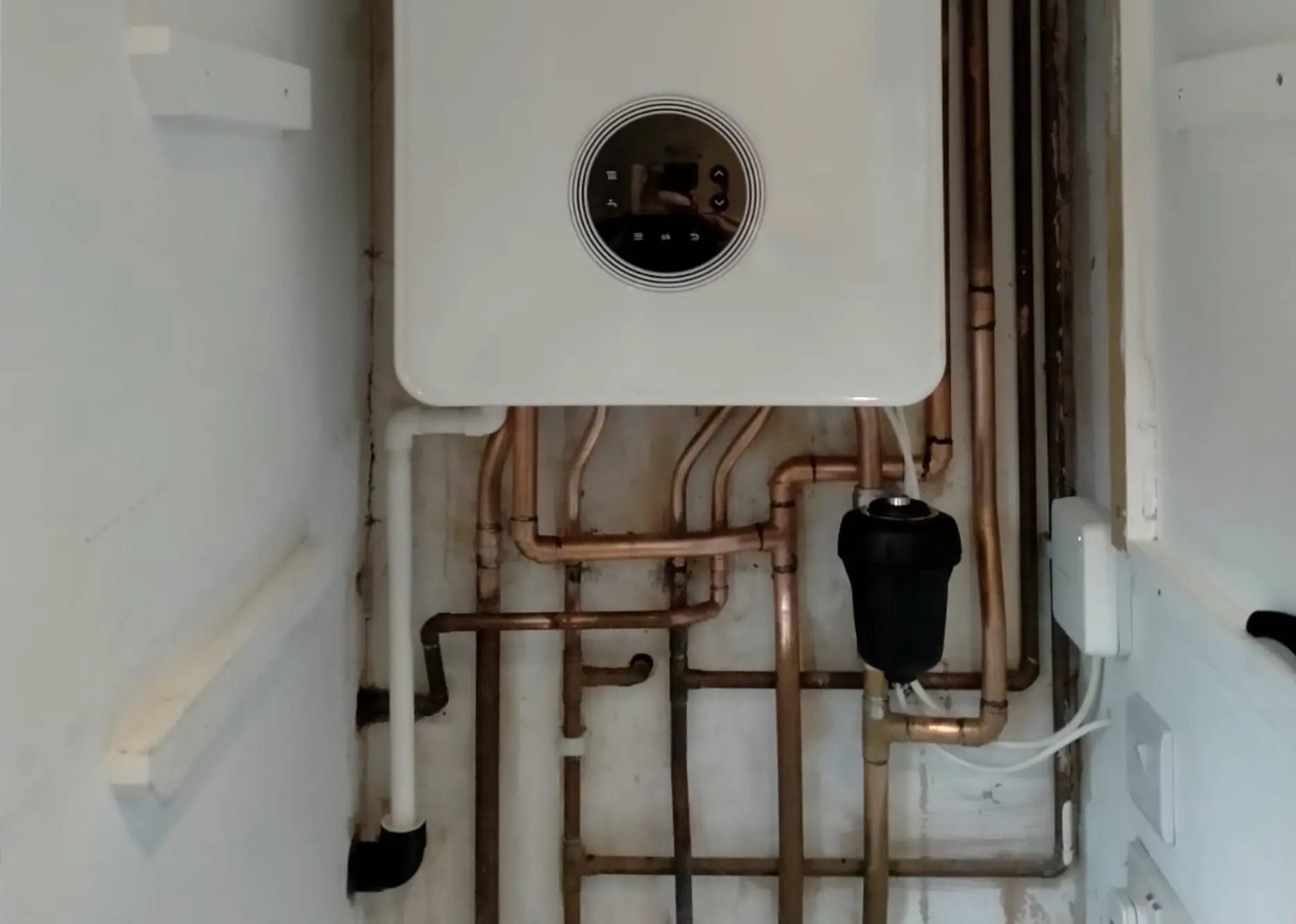
How To Hide A Boiler In Kitchen
How To Hide A Boiler In Kitchen: Practical Ideas That Still Keep It Accessible
The kitchen is the heart of the home and often has been designed to be cohesive and stylish, so a big white boiler can sometimes be an eyesore you don’t want on display in a room you use all the time. The most obvious solution that comes to mind is putting it in a cupboard, but you do have to be aware of clearances needed and access for maintenance and repairs. The best answer to how to hide a boiler is a personal approach, seeing what you can do with your space while sticking to the manufacturer's installation requirements.
Quick Summary
If you're wondering how to hide a boiler in your kitchen, there are several ways to make it less noticeable without making it difficult to access. Kitchen cupboards, purpose-built boiler housings and clever use of surrounding storage can all help. The important thing is that any enclosure meets the boiler manufacturer's requirements and allows engineers to safely access the appliance for servicing and repairs.
How To Hide A Boiler In A Kitchen
A boiler is useful, but it isn't always the most attractive thing to have on display.
If yours is mounted in the kitchen, particularly above a worktop or in an otherwise neat run of cupboards, you may be wondering how to hide a boiler in kitchen without losing valuable storage space or making the appliance difficult to maintain.
The good news is that a boiler doesn't necessarily have to remain on show.
With the right design, you can make it blend into the kitchen much more easily. The key is to think about access and safety before appearance.
Can You Put A Boiler Inside A Kitchen Cupboard?
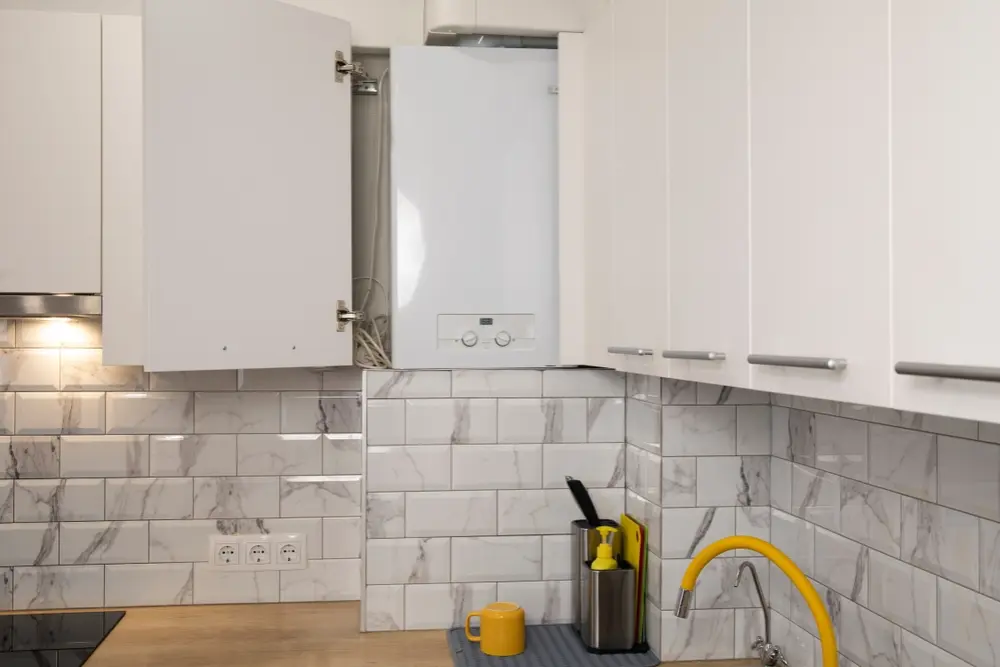
In many cases, a modern boiler can be installed inside a kitchen cupboard or purpose-built housing.
This is one of the simplest answers if you're wondering how to hide a boiler in a kitchen.
A cupboard can make the boiler look like another part of the kitchen, particularly if the door matches the rest of your cabinetry. From the outside, you may not even realise there is a boiler behind it.
However, you cannot simply build a cupboard around a boiler and assume it is suitable.
The boiler manufacturer's installation requirements need to be followed, including the clearances required around the appliance and the access needed for servicing.
Your heating engineer can advise whether your particular boiler can be enclosed and what type of housing is appropriate.
Use A Matching Boiler Cupboard
If you're planning a new kitchen, a matching boiler cupboard is often the neatest option.
The housing can be designed using the same door style, colour and handles as the rest of your kitchen, helping the boiler disappear into the overall design.
This works particularly well when the boiler is positioned within a run of wall units.
Rather than having one appliance sitting visibly between cupboards, the boiler becomes part of the cabinetry.
If you're having a new kitchen fitted, it's worth deciding where the boiler will sit before the final cabinet layout is agreed. Moving or enclosing a boiler later can be much more complicated than planning around it from the beginning.
How To Hide Boiler Pipes In A Kitchen
The boiler itself isn't always the only thing you want to conceal.
Exposed pipes underneath or around the appliance can make an otherwise tidy kitchen look unfinished. So, if you're searching for how to hide boiler pipes in kitchen, there are several approaches worth considering.
Use Cabinetry
Where practical, pipework can sometimes be concealed within or behind kitchen units.
This creates a much cleaner finish and means the pipes are not immediately visible against the wall.
However, the pipework still needs to remain accessible where necessary, and there must be enough room for any required maintenance.
Use A Purpose-Built Boxing
Where pipes cannot be hidden inside a cupboard, they may be enclosed using suitable boxing.
This can then be finished to match the surrounding wall or cabinetry.
The important thing is not to permanently seal away anything that an engineer may need to access. Removable or appropriately designed access panels can make future maintenance much easier.
Plan The Pipework Into The Kitchen Design
If you're installing a new boiler or renovating the kitchen at the same time, consider the pipe routes before the cupboards are fitted.
A little planning can make a big difference. Pipework that would otherwise be visible can sometimes be routed more neatly around the kitchen layout, rather than being dealt with as an afterthought.
Don't Completely Seal The Boiler Away
One of the biggest mistakes when thinking about how to hide a boiler is concentrating entirely on making it invisible.
A boiler still needs to be accessible for servicing, repairs and safety checks.
Depending on the type and model of boiler, there may also be specific requirements for ventilation, clearances and the surrounding enclosure.
Never block vents, flues or other openings simply to improve the appearance of the kitchen.
If you're considering building a cupboard around an existing boiler, ask a qualified heating engineer to check the proposed arrangement first.
What About Hiding A Boiler In A Tall Kitchen Unit?
A tall housing can be a useful option where the kitchen layout allows it.
The boiler can sit within the unit, with surrounding storage used for other items. This can make better use of an awkward section of wall and create a more deliberate appearance.
It can also work well for boilers installed alongside other kitchen appliances.
Again, the exact dimensions and construction need to be appropriate for the boiler. The cabinet should not simply be built as tightly as possible around the appliance.
Can You Hide A Boiler With A False Wall?
A false wall or bespoke enclosure can sometimes conceal a boiler and its pipework, particularly where the appliance is in an awkward location.
However, this approach needs more planning than a standard kitchen cupboard.
You need to consider:
- Access to the boiler
- Required clearances
- Flue position
- Pipework access
- Ventilation requirements where applicable
- Space for servicing and repairs
- How the enclosure can be removed or opened if necessary
A design that looks perfect on installation day can become a problem later if an engineer cannot safely reach the boiler.
What If My Existing Boiler Doesn't Fit The Kitchen Layout?
Sometimes the best way to hide an old boiler is not to build more cabinetry around it, but to consider whether the appliance could be replaced or relocated.
Modern boilers are available in different sizes and configurations, although the right option depends on your home's heating and hot water requirements.
If your boiler is old, unreliable or particularly bulky, a new installation may give you more flexibility when redesigning the kitchen.
KD Jones can advise on boiler replacement and installation, including whether a different boiler or position could work better with your kitchen layout.
When Should You Get An Engineer Involved?
If you're planning to hide an existing boiler, get advice before the cupboard, boxing or enclosure is built.
This is particularly important if you're:
- Installing a new kitchen
- Moving the boiler
- Replacing the boiler
- Changing the flue
- Concealing existing pipework
- Building a new enclosure around the appliance
A heating engineer can check the proposed arrangement against the boiler manufacturer's requirements and make sure the finished design won't cause problems when the boiler needs to be serviced.
A Boiler Can Be Hidden Without Becoming A Problem
The best answer to how to hide a boiler in kitchen isn't simply to cover it up.
Good boiler concealment should make the appliance less noticeable while keeping everything an engineer needs to access safe and practical.
A matching kitchen cupboard is often the simplest option, while bespoke cabinetry, pipe boxing or a carefully planned tall unit can work depending on the layout.
If you're planning a kitchen renovation, it's worth discussing the boiler at the design stage rather than trying to hide it once everything else has been installed.
Speak To KD Jones
If you're planning a kitchen renovation and want to know how to hide a boiler, KD Jones can help you understand what is possible with your existing appliance or discuss your options for a new boiler installation.
We can advise on boiler positioning, installation requirements and access, helping you find a solution that works with the kitchen rather than against it.
📞 Call us on 01737 211376
🌐 Visit our contact page to request a quote online
📍 Based in Redhill, we cover homes across Surrey and the surrounding areas
FAQs
How can I hide a boiler in my kitchen?
A boiler can often be concealed inside a suitable kitchen cupboard, purpose-built housing or tall unit. The enclosure needs to meet the boiler manufacturer's requirements and leave appropriate access for servicing and repairs.
How do I hide a boiler?
The most common option is to use a cupboard or purpose-built enclosure that matches the surrounding kitchen. Before enclosing a boiler, check that the appliance is suitable for the proposed housing and that all required clearances and access are maintained.
Can I put my boiler inside a kitchen cupboard?
Many modern boilers can be enclosed in a kitchen cupboard, but the requirements vary between models. The cupboard must be designed around the boiler rather than simply enclosing it as tightly as possible.
How do I hide boiler pipes in my kitchen?
Boiler pipes can sometimes be concealed inside kitchen units or behind suitable boxing. Pipework should remain accessible where required, and the enclosure should not prevent future maintenance.
Can I box in boiler pipes?
Yes, pipework can often be boxed in to create a neater finish. The design should allow appropriate access to connections and components that may need inspection or repair.
Can I hide my boiler behind a cupboard door?
Often, yes. A matching cupboard door is one of the simplest ways to make a boiler blend into a kitchen. The exact requirements depend on the boiler model and installation.
Can I build a cupboard around an existing boiler?
You should get advice before doing so. The enclosure needs to comply with the boiler manufacturer's requirements, and the engineer must still be able to access the appliance safely for servicing and repairs.
Can a boiler go inside a tall kitchen unit?
It can be possible, depending on the boiler and the available space. A tall unit can be a useful way of incorporating the boiler into the kitchen design while providing additional storage around it.
Can I completely hide my boiler?
You can make a boiler much less visible, but it should not be permanently sealed away. Engineers need suitable access for servicing and repairs, and the installation must comply with the manufacturer's requirements.
Should I replace my boiler when redesigning my kitchen?
Not necessarily. If your existing boiler is suitable and reliable, it may simply need a well-designed enclosure. If it is old, unreliable or poorly positioned, a replacement could give you more options when planning the kitchen layout.